
Cosmetic gel pump: a guide to selecting the right pump for high viscosities and sensitive products
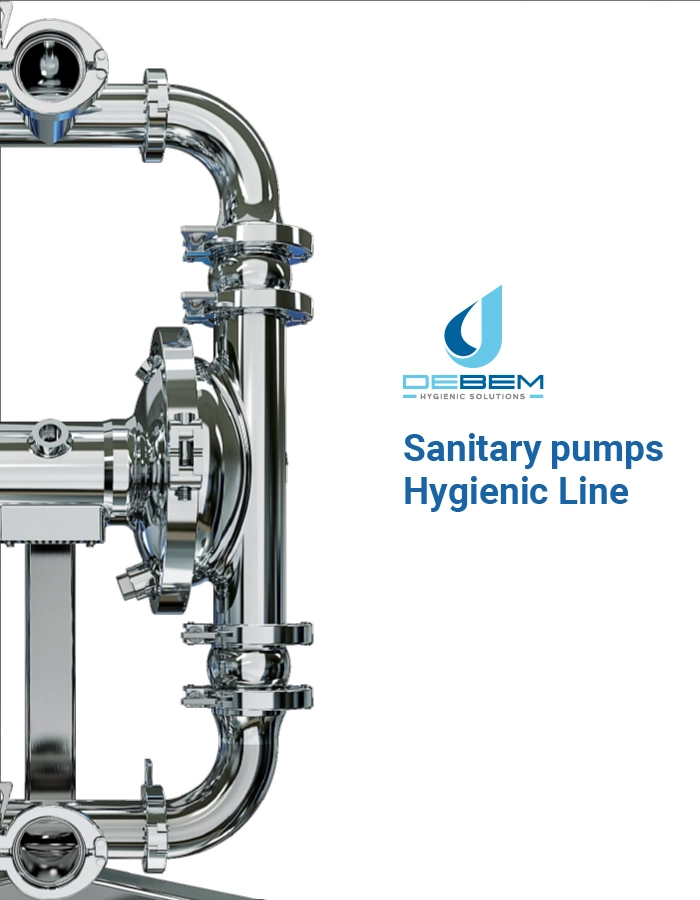
Within the cosmetics sector, pumping gels, serums and semi-solid textures is a particularly complex process for plant managers. Unlike low-viscosity liquids, cosmetic gels behave as non-Newtonian fluids: their viscosity changes under mechanical stress, and an unsuitable pump can compromise their consistency, destabilise emulsions or damage the active ingredients. This guide analyses the technical criteria for selecting a pump for industrial cosmetic gels, drawing on a real-world application where a manufacturer specialising in high-viscosity hair gels adopted the DEBEM AISIBOXER-03 hygienic pump to transfer the product from the preparation tank to the filling machine.
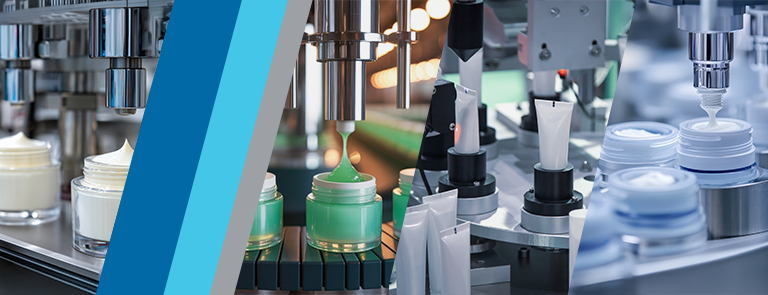
What makes pumping gels and cosmetic products challenging?
Cosmetic gels are pseudoplastic non-Newtonian fluids: their viscosity decreases under shear stress (shear thinning) and may increase at rest. This behaviour makes pumping critical because excessive mechanical force can disrupt the gel’s structure, alter the texture perceived by the consumer and compromise the product’s stability. The main critical factors are:
- Shear sensitivity: carbomers, xanthan gum, hyaluronic acid and gelling polymers degrade under excessive mechanical stress. A centrifugal or gear pump generates turbulence that is incompatible with these formulations.
- Variable viscosity: many gels change consistency depending on the process temperature. The pump must operate reliably across a wide range of viscosities.
- Risk of phase separation: emulsions and two-phase gels can become destabilised if subjected to aggressive pumping.
- Sensitive active ingredients: retinol, vitamin C, AHAs, fragrances and essential oils require the absence of frictional heat and minimal contact with unsuitable metal surfaces.
- Hygiene and contamination: cosmetic gels, which are free from strong preservatives, are microbiologically vulnerable. Any area of stagnation within the pump is a potential point of bacterial contamination.
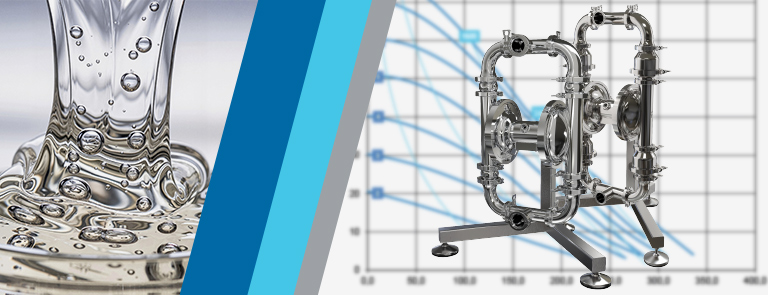
Which pump technology is suitable for pumping cosmetic gels?
A pneumatic double-diaphragm (AODD) pump is a particularly suitable solution for pumping high-viscosity cosmetic gels. Compared to centrifugal pumps (unsuitable for high shear) and peristaltic pumps (precise but with limitations in terms of flow rate and cleanliness), the hygienic AODD pump offers low shear, CIP compatibility, no mechanical seals and effective handling of varying viscosities.
| Technology | Product shear | CIP | High viscosity | Maintenance |
| Centrifuge | High | Good | No | Low |
| Peristaltic | Very low | Limited | Yes | Medium |
| Gears | Medium | Difficult | Yes | High |
| Hygienic AODD | Very low | Excellent | Yes | Low |
| Rotary lobe | Low | Good | Yes | Medium/high |

Essential technical requirements for a hygienic pump in the cosmetics industry
A pump intended for pumping cosmetic gels in an industrial setting must comply with the following minimum construction requirements: body made of AISI 316L stainless steel with a mechanical or electrolytic surface finish; diaphragms in contact with the fluid compliant with FDA regulations; a hygienic design free from cavities and areas where residue can accumulate; suitability for cleaning-in-place (CIP) or manual washing; no mechanical seals on the shaft; and the ability to completely drain the product at the end of each cycle. In detail, the essential requirements are:
- Contact materials: AISI 316L stainless steel with a surface finish of Ra ≤ 0.8 µm. Food-grade/FDA-compliant PTFE membranes, supported by EPDM.
- Hygienic design: no sharp corners, cavities or dead zones where gel can accumulate between batches.
- Total drainage: the Quick Emptying system allows the residual product to be completely recovered at the end of the cycle, reducing waste and making it easier to change formulations.
- CIP compatibility: the internal geometry must allow the cleaning solution to reach all surfaces without the need for dismantling.
- Regulatory compliance: FDA, MOCA (European markets), and 3-A where required.
To assess the most suitable configuration for your formulations and process conditions, the Debem technical team is available to provide personalised advice.
FAQ — Pump for industrial cosmetic gels
Which pump is suitable for high-viscosity gels in the cosmetics industry?
The hygienic AODD pump is the most suitable solution: it operates at low shear, requires no mechanical seals in contact with the product, and effectively handles varying viscosities without altering the gel’s structure.
Can an AODD pump damage a gel containing retinol or vitamin C?
No, provided it is correctly sized. AODD technology does not generate heat through friction and operates at low speeds, preserving the stability of photosensitive or chemically reactive active ingredients such as retinol, vitamin C and AHAs.
How often should a pump for cosmetic gels be sanitised?
The frequency depends on formulation changeovers and GMP requirements. As a general rule, sanitisation takes place at every batch or formulation change. Hygienic, CIP-compatible AODD pumps allow for wash cycles without disassembly, reducing downtime.
Can the gel crystallise or solidify inside the pump during plant downtime?
This is a real risk for formulations containing high concentrations of polymers or waxes.
What is the difference between a standard AODD pump and a hygienic version for cosmetics?
The hygienic version is characterised by: an internal surface finish of Ra ≤ 0.8 µm, the absence of dead spaces, FDA/MOCA-compliant materials on all parts in contact with the product, and a design certified for CIP cleaning without dismantling.
Is Debem’s AISIBOXER-03 pump certified for cosmetic use?
Yes. It features an AISI 316L stainless steel body with a machined finish, FDA-compliant diaphragms, and a MOCA-compliant hygienic design for contact with cosmetic products intended for the European and international markets.