
Cream transfer pump: why is AODD technology the right choice for dairy production lines?
Cream is one of the most critical and delicate fluids to handle within a dairy production line. Transferring it correctly whilst preserving its structure, consistency and microbiological quality is a major challenge within the dynamics of food fluid pumping. For this reason, choosing the wrong cream transfer pump can increase the risk of product degradation, foam formation, fat phase separation, excessive cleaning times and avoidable line downtime. This article analyses the real issues in cream transfer lines and explains why Debem’s hygienic AODD pumps represent the most appropriate technical solution.
What are the risks in cream transfer processes?
Cream is an unstable emulsion of water and fats, with a viscosity that can range from a few tens of cP for fresh cream up to over 1,000 cP for chilled high-fat cream. This variability, combined with its sensitivity to mechanical handling, makes it a fluid that requires specific attention when selecting a pump. The critical factors to consider are:
- Sensitivity to shear: excessive mechanical agitation causes separation of the fat phase, resulting in loss of consistency, in-line foaming and organoleptic degradation of the product.
- Viscosity variation: cream exhibits significant changes in rheological behaviour depending on temperature. A pump sized solely for the nominal operating point may operate outside its range during start-up or in the event of process temperature fluctuations.
- Risk of contamination: any internal deposit point within the pump — cavities, worn mechanical seals, non-drainable surfaces — becomes a potential bacterial breeding ground in a product with a high fat and protein content.
- Incompatibility with centrifugal technologies: centrifugal pumps, by their very nature, operate at high speeds and generate turbulence which, in a sensitive fluid such as cream, produces shear that is unacceptable for the quality of the final product.
The most common problems in cream transfer lines
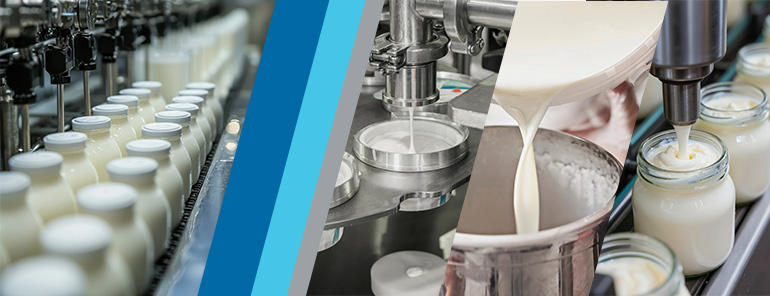
Companies in the dairy sector that use pumping technologies not optimised for cream regularly report the same operational problems:
- Deterioration in product quality: the cream arrives at the point of use — filling, mixing, pasteurisation — with characteristics different from those expected, with partially separated fat or an altered structure.
- Foaming in the line: aggressive pumping introduces air into the product, generating foam that disrupts subsequent filling and measurement stages.
- Frequent maintenance downtime: the mechanical seals in conventional pumps wear out quickly when in contact with fatty fluids and the aggressive detergents used in CIP cycles, leading to unplanned maintenance.
- Residual product losses between batches: pumps that do not ensure complete line drainage leave residual cream that spoils, increasing the risk of bacterial contamination and generating waste between batches.
- Ineffective or excessively long CIP: complex internal geometries, mechanical seals and dead spots in the pump prolong cleaning cycles and increase water and detergent consumption.
Why does a hygienic AODD pump solve the problems associated with cream transfer?
Debem food-grade pumps solve each of these problems through specific design features.
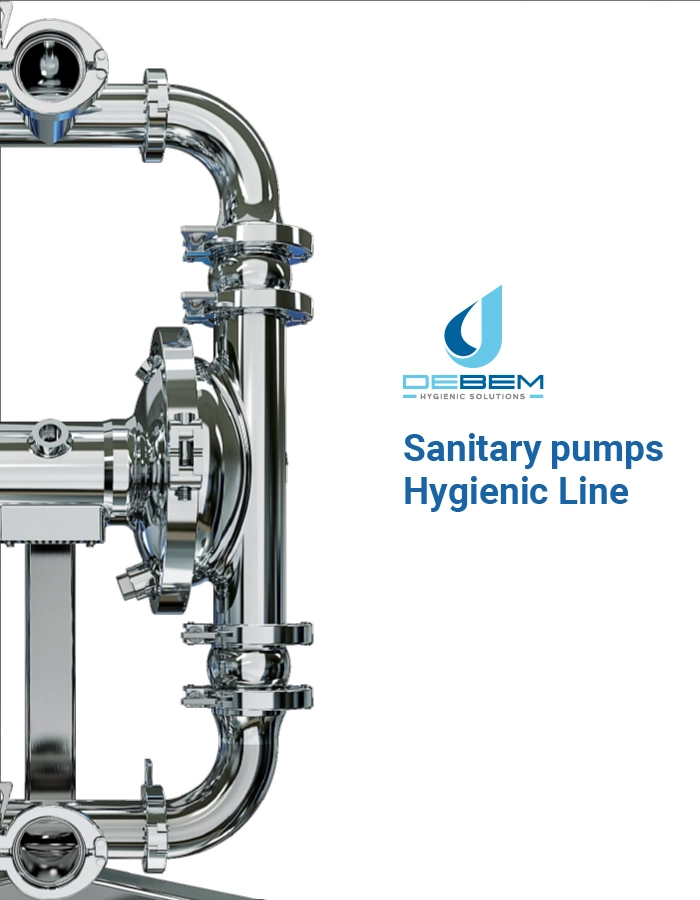
- No mechanical seals: Debem hygienic AODD pumps have no mechanical seals on the shaft. Fluid containment is entrusted exclusively to the diaphragms, eliminating the risk of metal particles or lubricants entering the product.
- Food-grade PTFE diaphragms: Debem diaphragms are partly made of food-grade PTFE for contact with the fluid, supported by an EPDM layer. The unique surface shape and the absence of anchor plugs prevent the formation of product deposits and facilitate fluid flow without trapping.
- Quick Emptying system and swivel connections: The quick emptying system allows the product in the line to be fully recovered at the end of each batch, reducing waste and improving production yield. The swivel connections facilitate positioning of the pump for complete drainage.
- Integrated optical sensors: the optical sensors enable real-time monitoring of the pumping cycle, detecting any anomalies in the condition of the diaphragms and promptly signalling abnormal situations without requiring continuous manual inspections.
To illustrate the practical benefits of Debem’s solutions, consider the case of a manufacturer specialising in fresh cheeses whose transfer system no longer guaranteed the required continuity and quality . After evaluating the available options, the company chose the Debem AISIBOXER 02 pump in AISI 316. The pump is currently used five days a week, ensuring a constant and gentle flow, rapid cleaning cycles and the complete recovery of residual cream in-line.
Hygienic AODD pump vs other technologies for cream transfer
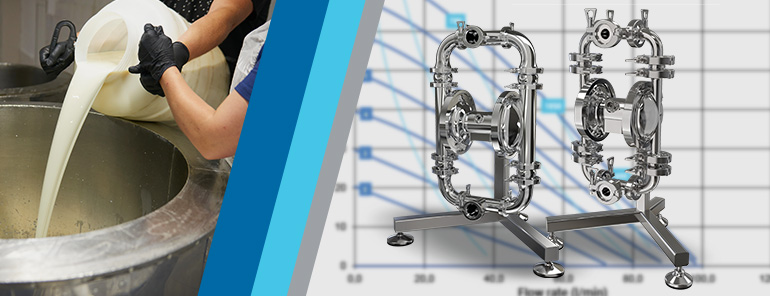
Not all pumping technologies are equal when the product to be transferred is cream. The wrong choice comes at a cost in terms of product quality, cleaning times and maintenance costs. The table below compares the main technologies available across the five most relevant parameters for the dairy sector.
| Technology | Sanitary centrifugal pump | Lobe pump | Progressive cavity pump | Debem sanitary AODD |
| Shear pump | Medium/high | Low | Very low | Very low |
| CIP cleaning | Good/excellent | Good | Fair/good | Good/excellent with correct CIP cycle |
| Residues in the line | Low | Medium/low | Low/medium | Reduced if properly drained |
| Maintenance | Low/medium | Medium/high | Medium/high | Low/medium |
| Suitability for cream | To be assessed | Very suitable | Very suitable | Recommended for delicate transfer |
The advantage of the hygienic AODD pump over other low-shear technologies (lobe, progressive cavity) lies in its simple construction, the absence of mechanical seals, ease of maintenance and full compatibility with CIP cycles without dismantling.
Checklist: minimum data required to select a cream transfer pump
Before contacting a supplier to select a cream transfer pump, you need to gather the following data:
- Type of cream: fat content (%), heat treatment (fresh, pasteurised, UHT), presence of solids or flavourings.
- Process temperature: minimum and maximum temperatures during transfer.
- Flow rate: minimum and maximum required, not just the nominal design value.
- Pressure: total head including line pressure drops and height differences.
- CIP cycles: type of detergents, temperatures and frequency of washes.
- Certification requirements: FDA, MOCA, 3-A, EHEDG depending on the product’s target markets.
- Batch change frequency: to assess whether the Quick Emptying system is a priority.
Identifying the right solution for cream transfer requires a careful analysis of process requirements. The Debem team is available to provide personalised technical support.
Contact the Debem team for technical advice
FAQs on cream pumps
What is the difference between a lobe pump and a hygienic AODD pump for the dairy sector?
Both are low-shear and suitable for viscous products. The main difference lies in their design simplicity and maintenance: lobe pumps require shafts, bearings and mechanical seals that need periodic maintenance. Debem’s hygienic AODD pumps have no mechanical seals, are easy to maintain and are compatible with CIP cycles without disassembly.
How often do PTFE diaphragms need to be replaced when used with cream?
The service life of PTFE diaphragms is significantly longer than in applications involving chemicals. Replacement depends mainly on the number of cycles and frequency of use. It is advisable to establish a baseline at start-up and plan replacements based on air consumption trends and periodic checks.
How is the CIP cycle performed on a Debem hygienic AODD pump?
Debem hygienic AODD pumps are designed for CIP without disassembly. The standard cycle involves: pre-rinse with water, wash with caustic solution, intermediate rinse, acid or disinfectant sanitisation, final rinse. The internal geometry, which has no dead spots, ensures that the cleaning solution reaches all surfaces in contact with the product.